基本 Kihon: Basic Karate Stances
Strong, stable stances are the foundation of karate. They provide balance, power, and the ability to deliver effective techniques. Master these four fundamental stances.
前屈立ち Zenkutsu Dachi (Front Stance)
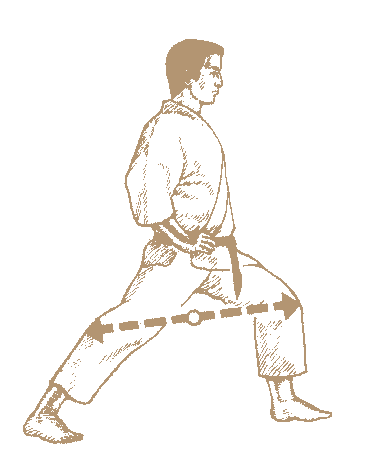
The most commonly used stance in karate. It provides excellent stability and power for forward techniques and is ideal for offensive movements.
How to Execute:
- Stand with feet shoulder-width apart
- Step forward with one leg, approximately a shoulder-width's distance forward and slightly wider to the side
- Front knee should bend deeply (about 90 degrees), directly above the ankle
- Back leg should be straight with the heel planted firmly
- Weight distribution: approximately 60% front, 40% back
- Keep hips level and facing forward
- Torso remains upright and relaxed
Key Benefits:
- Powerful for delivering punches and kicks
- Good forward mobility and aggression
- Strong base for body rotation
- Ideal for linear attacks
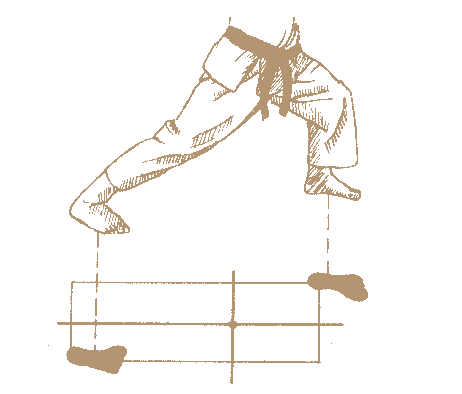
後屈立ち Kokutsu Dachi (Back Stance)
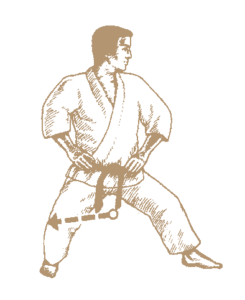
A defensive stance that places weight toward the rear leg, making it excellent for blocking, evading, and preparing counterattacks.
How to Execute:
- Position feet perpendicular to each other, approximately one shoulder-width apart
- Back foot points backward at approximately 90 degrees
- Front foot points forward
- Weight distribution: approximately 70% back, 30% front
- Back knee bends while front leg remains mostly straight
- Front foot stays light, ready to move quickly
- Hips face partially sideways (about 45 degrees)
- Upper body remains calm and centered
Key Benefits:
- Excellent for defensive blocks and evasion
- Provides mobility for quick withdrawals
- Strong position for side kicks
- Effective for counterattacking techniques
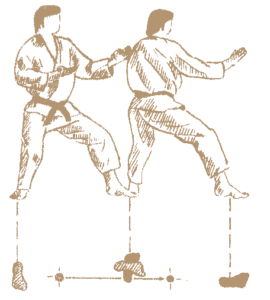
騎馬立ち Kiba Dachi (Horse Stance)
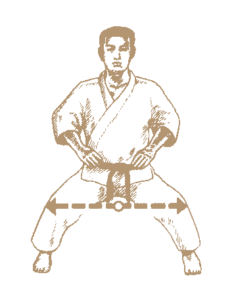
Also called the "straddle stance," this wide stance is used for side techniques and builds strong legs and balance through low body positioning.
How to Execute:
- Stand with feet two shoulder-widths or more apart
- Both feet point forward, parallel to each other
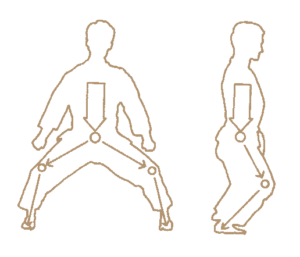
- Bend both knees deeply, lowering your center of gravity
- Knees should align directly over ankles, never extending past toes
- Thighs should be approximately parallel to the ground
- Weight distributed evenly on both legs (50-50)
- Torso remains upright and centered
- Hips face forward squarely
Key Benefits:
- Powerful for side-directed strikes and blocks
- Builds exceptional leg strength and endurance
- Excellent balance and stability in all directions
- Develops core strength and body control
構え Kamae (Guard Position)
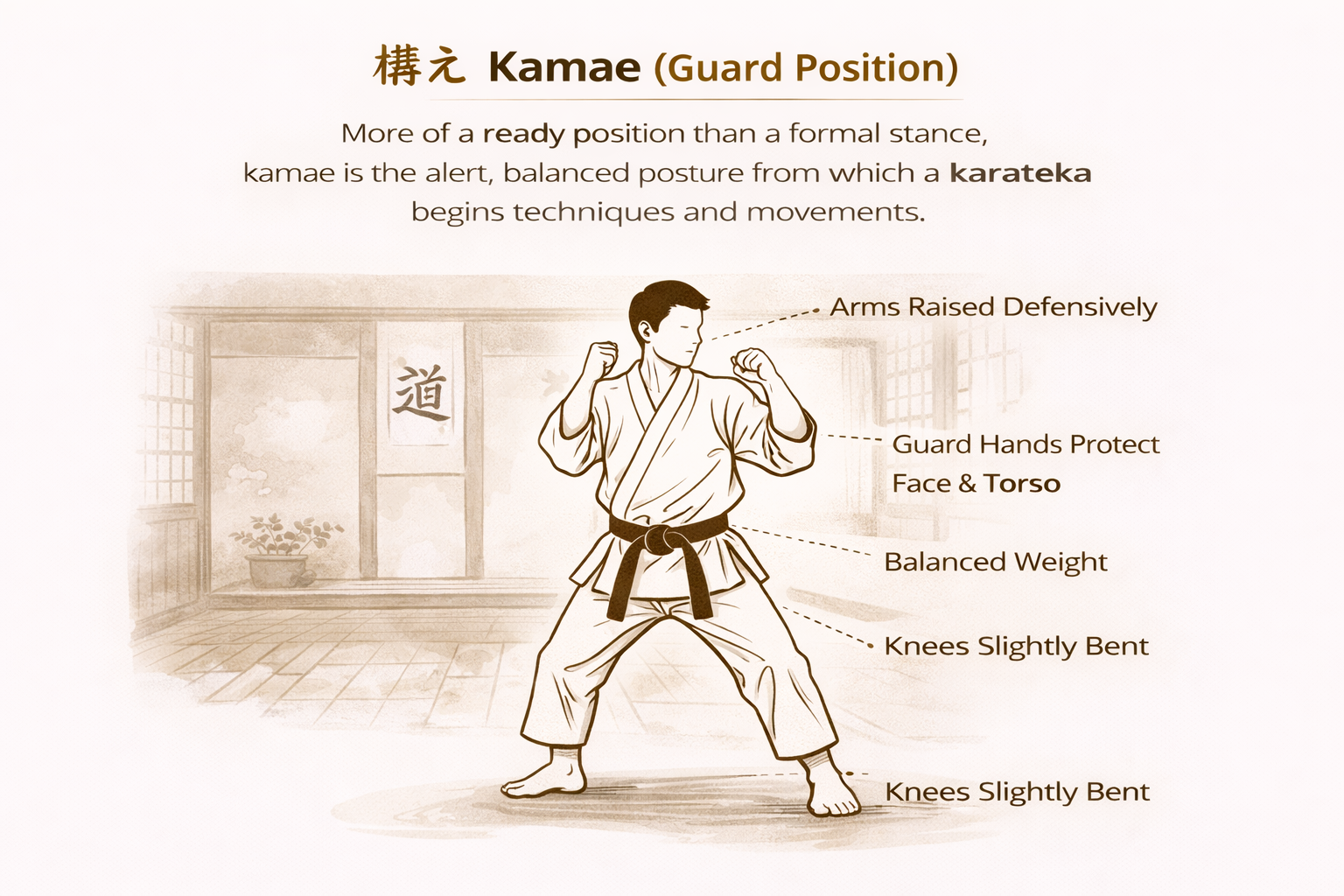
More of a ready position than a formal stance, kamae is the alert, balanced posture from which a karateka begins techniques and movements.
How to Execute:
- Stand naturally with feet about shoulder-width apart
- One foot positioned slightly forward of the other
- Knees slightly bent for quick movement
- Weight balanced and light, ready to shift direction
- Arms raised defensively in front of the body
- Guard hands positioned to protect face and torso
- Chin tucked slightly, eyes focused on opponent
- Shoulders relaxed but alert
Key Benefits:
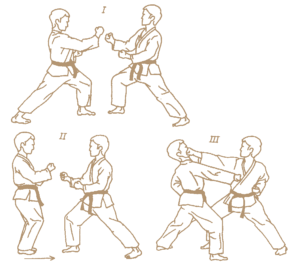
- Natural, mobile position for general sparring
- Maintains protection while allowing movement
- Quick to transition to formal stances
- Promotes awareness and reaction time
General Tips for All Stances
- Breathing: Always breathe naturally. Never hold your breath.
- Tension: Be relaxed but focused. Excessive tension wastes energy.
- Core: Engage your core muscles to maintain proper structure.
- Repetition: Practice stances daily to build strength and muscle memory.
- Mirror Work: Use a mirror to check your form and alignment.
- Balance: Feel grounded and stable, with weight centered in your lower abdomen (hara).